Showing posts with label 2000. Show all posts

Friday, August 29, 2025

2000 Firefly - Around The Web

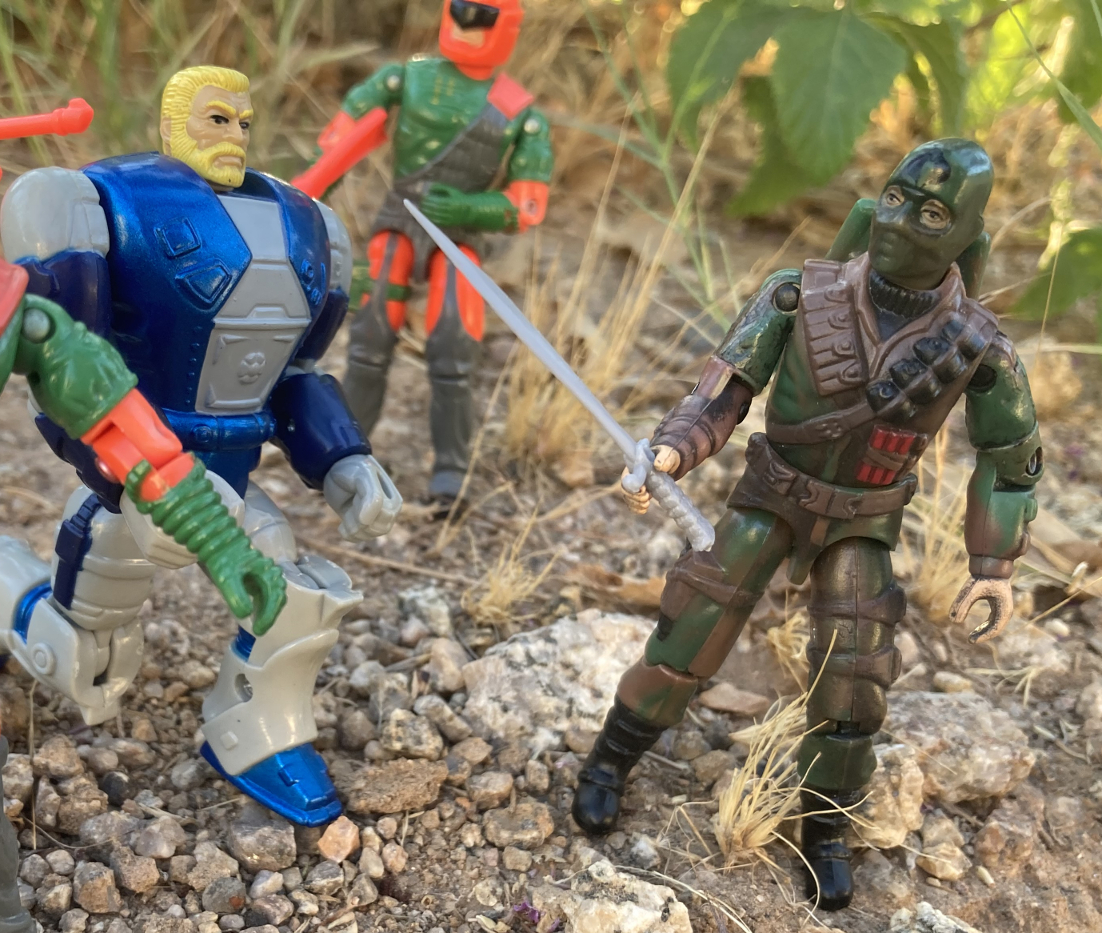
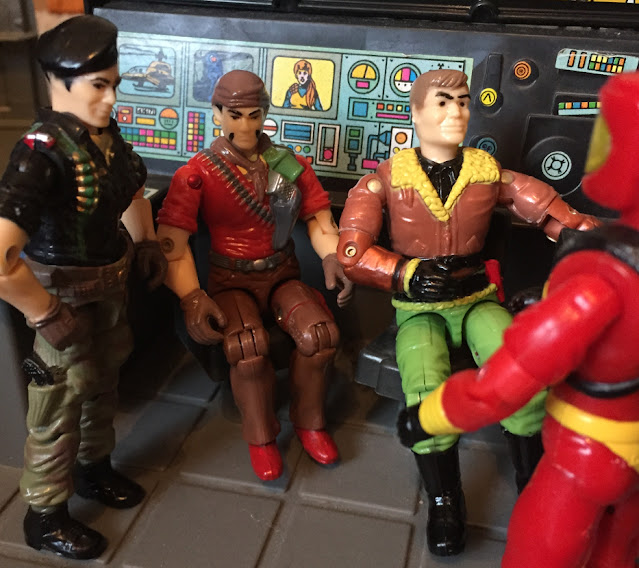
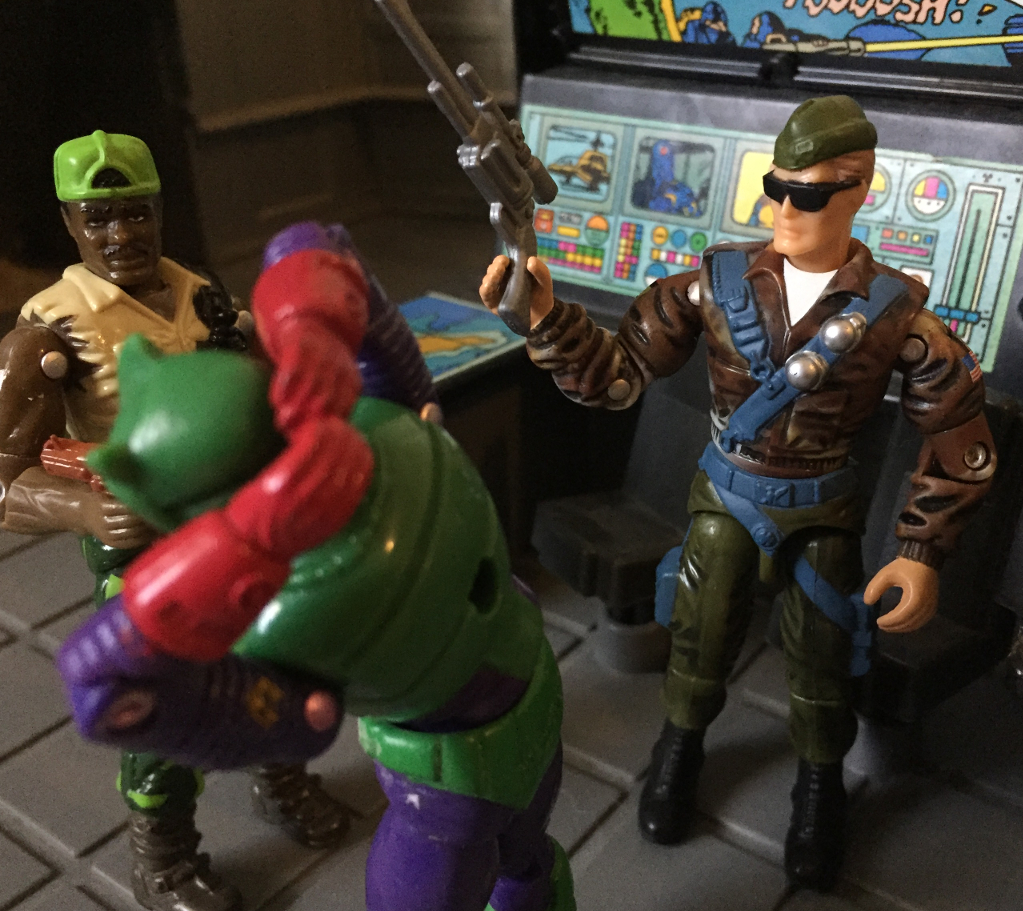
This was an emergency replacement of another post.  That one will go up in two weeks.  I searched for an antithesis to that, planned figure post and came up with this 2000 Firefly.  It's a classic mold done up in very traditional (though, not Cobra) colors.  In general, it's a strong version of Firefly.  In the fall of 2000, you could make the case it was the best Firefly.  Or, at least on par with the vintage version since it had all the cool accessories along with softer plastic hands.  But, no collector of that era actually made that argument.  The two main reasons were the paint wipes and the altered face mask.  For me, it was the ungloved hands that superseded the mask changes.  But, I was in the minority on that point.  

Fun fact: no two versions of this Firefly are the same.  The marbelized plastic that debuted in 2000 ensured that every figure had slight nuances.  And, you can even find major changes where a figure may have a brown head, green head or a balance of the two.  The same is true of the rest of the mold.  If you like the green, you can find a figure that features a lot of it.  The brown is similar.  If you're really ambitious, you could kitbash a nearly all green or all brown figure from a plethora of figures.  But, no one's really done that.

This Firefly is among the most used ARAHC figures from 2000 and 2001.  Since he's Firefly, you see him more often than other characters.  The colors and gear work to make a figure that fits into scenes just like the original, grey figure.  But, is also a better match for outdoor shots among the plants and trees.  So, check out the content below and let the creators know you stopped by.

2000 Firefly Profile

2000 Firefly by fosilru

2000 Firefly by themexicangriswolds

2000 Firefly  by Yo Valley Joe

2000 Firefly by instachampa


2000 Firefly, ARAHC, 2023 Wraith Viper, Black Major, Factory Custom
2000 Firefly, ARAHC, 1983 Major Bludd, 1985 Mauler


2000 Firefly, ARAHC, 2023 Wraith Viper, Black Major, Factory Custom


Monday, January 8, 2024

2000 Firefly

In 1997, Hasbro brought back a collector series of G.I. Joe figures as Toys R Us exclusives.  These figures went through several design stages before they were finally brought to retail.  Hasbro's intent for the series was to use many of their most popular molds of the most popular characters.  One of the original products that was considered included a repaint of the highly loved 1984 Firefly figure.  The hand painted designs showed a figure with a grey base but some green highlights.  But, by the time the 1997 figures came out, Firefly had long been removed from the assortment.  In 1998, though, the Firefly mold returned.  Instead of the forest theme, though, Hasbro repainted him into an excellent winter theme.  It is one of the highlights of the repaint era for sure.  The Toys R Us sets, though, ended in 1998 as Hasbro geared up for a broader return of Joe to retail.  When the first wave of 2000 figures showed up, collectors were finally greeted by a woodland Firefly.  The ARAHC release was both much maligned by collectors and also very welcomed.  It was an odd juxtaposition.  But, it perfectly fits this figure's legacy.

Upon this Firefly's release, collectors rejoiced at another paint job of a hugely popular character becoming available.  At the same time, they maligned some of the design choices that Hasbro made with the figure.  All of the 2000 series figures were given "PAINT-WIPES" in an attempt to add the "gritty realism" that Hasbro thought fans of the time really wanted.  The result is that many of the figures look like they fell into the tar pits.  For Firefly, though, the effect is somewhat lost on the dark green and brown body.  There is really only one area where they are apparent: the figure's hands.  This Firefly is bare-handed and not wearing gloves.  Every other version of Firefly using his mold has gloves.  (The Wreckage figure, who is a Joe, though, does also feature bare hands.)  It's kind of an off-putting image to see Firefly with bare skin.  And, the choice to not glove Firefly's hands is made all the worse by the paint wipes that just make it seem like he's been making mud pies all day.  The hands were most criticized aspect of this figure and, even today, can be a contentious point with many collectors adamant that the hands ruin an otherwise excellent figure.

Really, though, this Firefly isn't all that well done.  Hasbro let the marbelized plastic body handle most of Firefly's colors.  Aside from that, he only has red explosives and black grenades on his chest.  The did give him a black undershirt and boots to provide a little color.  But, this figure is a far cry from the Firefly repaints of 2004 and 2005 that fully showcased the mold's details and gave the figure remarkable life with 6 or 7 different colors.  Also, it should be noted that the green and brown marbelized plastic on Firefly is not consistent.  This means that every single Firefly is really a unique figure.  But, some versions have more green plastic while some have more brown.  It's possible to find figures that appear to be green with brown accents and others that appear brown with green accents and still more that are right in the middle.  This offers modern collectors choices since they can find a Firefly that best fits their aesthetic preferences.  But, it can also leave you bewildered at the fact that photos of the figure you find online do not match the figure you have in hand.

The other major change to Firefly's look is his mask.  Hasbro treated collectors a a giant, black Cobra sigil on Firefly's forehead.  In red, this would have been too much.  But, the black blends with the figure and prevents the logo from being too over the top.  The bigger change, though, is that Firefly's eye slit is now broken into two, separate eye holes.  (Insert Rick and Morty joke here....)  The mask now has a painted barrier between the eyes.  For some, this was not a well liked update.  Personally, I don't mind it.  When the only real exposure collectors had to the Firefly was the 1984 version, this update seemed bigger than it was.  Now, it's as much part of the figure as the open mask of the 1984 is.  I like the update since it gives some differentiation to this Firefly.  But, it's not really a huge enhancement or detriment.

This Firefly struggles to find a niche.  The green and brown base help make him a woodlands version.  And, he is a nice match for the 2002 green Vipers.  If you want an outdoors Firefly, this is probably the version for you.  Over the years, I've found him a good option for outdoor photography.  At the same, time, though, I usually end up opting for other figures.  They work well enough and have the iconic coloring that seems to attract people's attention.  But, the original Firefly is surely better.  And, the 2004 Urban Assault release as well as the 2005 Comic Pack versions are, easily, superior figures.  This version works in that he's different and having options for a character as important as Firefly is useful.  But, if you are economizing a collection, this is an easy version to pass over since there are so many better options for the mold.

Firefly's gear is iconic.  Getting it back in 1998 was a treat.  And, getting it in 2000 was even better.  The black version of the rifle was something collectors had always wanted.  No one knew we'd be sick of the gun in just a few years.  So, these early versions of Firefly were a treat.  I had quickly lost the cover to Firefly's pack when I was a kid.  So, that's a piece that I've always held in high regard.  This figure includes a unique coloring of the pack: again using the marbelized green and brown plastic.  So, once again, you can find versions that are drastically different in primary colors from each other.  Missing, though, was Firefly's walkie talkie.  (Sorry, I'm hard pressed to call it a phone since it was released in 1984....)  The upside is that a black version of it appeared with other 2000 figures and many others since.  But, it was an odd omission.  Firefly's original card artwork showed him with a pistol.  I've always wondered if the figure was originally going to include two weapons before Hasbro either removed the gun or simply replaced it with the radio.

Hasbro got all they could from the Firefly mold.  After the US release, Hasbro also released Firefly in Europe and Japan.  The mold then showed up in India.  Funskool released a Firefly that was nearly identical to the 1984 coloring for a few years in the 1990's.  During that time, the mold was colored light blue and yellow and also used in the Complan Commandos line as Rocker.  Hasbro got the mold back around 1997 and released Firefly in 1998, 2000, 2002, 2003 (2 Convention repaints and a repainted Joe named Tiger Force Wreckage), 2004 and 2005.  And, in 2005, the body was released again but with a new head.  Firefly's chest was going to be used on the "Tiger Force Steel Brigade" figure, but it was never released.  There is also an unproduced green body 2002 Firefly as well as an alternate Urban Assault figure that were widely available to collectors.  Hasbro made Firefly in grey, green, red, black, blue, crimson and even a weird orange and green variant.  There's something for everyone if you collect Firefly.

This Firefly had a very odd pricing history.  In the fall of 2000, you could buy all of this figure you wanted for $8 at Toys R Us or KB Toys or $5.84 at Wal Mart.  I bought half a dozen or more and left many multiples of that number behind.  Everyone had the figure and didn't think anything of finding him.  That all changed in January of 2001, though.  Firefly was discontinued from the Joe case assortments right as the line's popularity took off.  Hordes of new collectors came online in early 2001: only to discover they had just missed the first wave of retail Joes.  Firefly quickly rose in price.  MOC versions of him and Undertow were $30 purchases by the summer.  And, by the fall, you could sell MOC sets for $75.  (At the same time, a mint and complete with filecard Starduster was $30 and MOC Satans were $50!)  Then, though, Hasbro started releasing the Firefly mold in what seemed like every wave.  By 2005, this Firefly had fallen from grace and you could get MOC figures for around $20.  From there, the figure went into a freefall, with MOC figures running $10 well into the 2010's.

Now, left to the open market, this Firefly is pretty cheap.  Mint, loose and complete figures run in the $6-$10 range depending on timing and the filecard.  Dealers, though, routinely get $16-$20 for the figure, mostly just due to having the figure available at any given time.  You can still get carded versions for around $20.  And, since you get the excellent Undertow figure in the same pack, it's probably the way to go.  The 2000 Firefly certainly isn't the worst release of the mold.  But, it's close to the bottom...only because so many subsequent figures were excellently done.  For cheap, this guy is a valuable pick up.  But, the figure has limitations and the color scheme really doesn't offer anything drastically different enough from better releases to be a must buy.

2000 ARAHC Firefly, 2005 Comic Pack Ripper, Dreadnok, 1986 Sears Exclusive Dreadnok Stinger, Dreadnok Ground Assault

2000 ARAHC Firefly, 1993 Flak Viper, Star Brigade Rock and Roll, Armor Tech


2000 Firefly, ARAHC, BAT, Battle Android Trooper, 2008, Convention Exclusive, Headhunter BAT


2000 Firefly, ARAHC, Mummy Mask, Power Commandos, Lucky Bell, Bootleg


2000 Firefly, ARAHC, 2003 Convention Black Dragon Trooper, 2001, Crossfire


2000 Firefly, ARAHC

2000 Firefly, ARAHC, 2001 Rip It, Hiss Driver, 1983 Hiss Tank

Saturday, April 8, 2023

Funskool General Flagg - Around The Web

Back in late 2000, I imported a couple of Funskool figures from Malaysia.  The seller had a few harder to find 1993 and 1994 figures, too.  So, it made a lot of sense to pick up some relatively cheap Funskool figures.  Among them was a brand new figure that had never appeared anywhere else prior: General Flagg.  When I got the figure in hand, it was more awesome than I had imagined.  The quality was good and the colors were amazing.  That Flagg then became widely available in Feb. of 2001 when mass quantities of Funskool figures began to be imported to the U.S.  

Since then, the figure still remains my favored use of the General Flagg mold.  I try to use it as often as I can since you don't see it all that often.  Below, you'll find what links on the figure I could find.  Not a ton of content.  But, General Flagg is generally obscure.  And, an Indian release of him wasn't a figure that a ton of collectors really coveted back in the early 2000's.

Funskool General Flagg Profile

Funskool General Flagg Variants by Funskool Rony

Funskool General Flagg by kushviper

Funskool General Flagg by Funskool Rony

Funskool General Flagg by the Dragon Fortress

Funskool General Flagg by shaleenguharoy

Funskool General Flagg by aicrtm

Funskool General Flagg by toysjoy357

Funskool General Flagg by shaleenguharoy

Funskool General Flagg by Funskool Rony


Funskool General Flagg, Flint, Tunnel Rat, 1992 BBQ, Barbecue, Eco Warriors, Psyche Out


Funskool General Flagg, Flint, Tunnel Rat, 1992 BBQ, Barbecue, Eco Warriors


Tuesday, January 10, 2023

2001 ARAHC Big Ben

This arctic Big Ben is the figure that killed the ARAHC line.  It was released just before Christmas in 2000.  But, within just a few months, this Big Ben and his pack-mate, White Out, would ruin what had been an incredibly promising start to a Joe resurgence at retail.  It's not this figure's fault, though.  The reality is that he is an amazing update to a a character who was incredibly obscure at the turn of the century.  But, things conspired against him and a series of bad decisions by Hasbro turned this promising repaint into one of the greatest pegwarmers of all time.

In 2000, collectors fell into two camps: those who felt the line ended after 1985 and those who felt it ended after 1987.  It was nearly impossible to find loose figures made after 1989 as the kids who collected them had yet to really come online.  As such, figures from 1990 and beyond were all but unknown.  One of the reasons I started my site in late 1999 was because I felt that figures from the final years of the line deserved a place that would spotlight them so more collectors would become aware of their quality.  So, when Hasbro pulled out some molds from the 1990's as repaints for the new line of Joe figures at retail, it was, for many collectors, the first time they'd really paid any attention to the figure molds or characters.  And, in the case of Big Ben, they found a decent sculpt with great gear and a useful character.  And, loose 1990 Big Bens weren't exactly common at the time.  So, for many collectors of the day, the ARAHC repaints would be their first interactions with these molds.  While there was some grumbling by the most militant of Joe collectors about the later mold inclusions, they were, generally, welcomed by the community since they seemed like new figures instead of just a standard repaint.

Now, we get to the meat of why this figure destroyed Joe's chances at retail.  In 2000, the first wave of the ARAHC figures saw a modest launch.  They were sold at Toys R Us, KB Toys, and Wal Mart.  I do not recall if K-Mart picked up the first wave.  But, Target definitely did not.  However, the first wave sold relatively well.  While it was never hard to find from October through December of 2000, it also didn't back up very much with the exception of the Cobra Commander/Chameleon two pack.  

The reason those Cobras backlogged, though, was because they were 3 to a case.  So, their overabundance was the result of a deliberate choice by Hasbro to try and help stave off demand.  Snake Eyes and Storm Shadow were also 3 per case, but they sold more quickly.  The remaining figure packs were all 2 per case.  As the waves sold through, the Cobra Commander and Chameleon pack was the only real pegwarmer.  But, if you hit a few Wal Marts or Toys R Us stores in a given day, you'd find every pack from the wave.  

The strong sales both got other retailers (most importantly, Target) to start carrying the line and also expand the retail space allotted for the figures.  So, Wave 2 (it should be noted that Hasbro named the waves with Roman Numerals.  So, from here on out, I'll refer to them by that nomenclature.  This only slightly matters because there were nearly two Wave 5's released in 2002.) quickly started hitting retailers.  And, it hit in force.  Stores got shipment after shipment of them.  And, for a while, they sold pretty well.  But, here's where two fatal flaws in Hasbro's logic converged to kill the line.

In 2001, interest in G.I. Joe surged.  The combination of greater internet access, more children of the '80's coming online, a new comic and even the broader acceptance of buying online at places like Ebay lead to an uptick in interest that still hasn't been matched by the 2007 Anniversary figures or even the Classified 6" series of figures.  Hundreds of new collectors came online every month.  And, they were eager to buy up the memories of their childhood.  Hasbro, was all too willing to meet the demand for these new figures.  The problem was, though, that Hasbro stopped making Wave I cases.  And, as such, only shipped Wave II cases in 2001.  And, the Wave II case breakdown was pretty bad.  It had three new 2 packs: Duke and Sidetrack, Major Bludd and the Rock Viper and Big Ben and White Out (a 1983 Snow Job repaint.)  The figures were all fine.  The case was rounded out with the carry overs of Snake Eyes/Stormshadow and Dusty/Law.  To get to 12 figure packs per case, Hasbro decided to include 4 Big Ben/White Out packs per case.  No other figure pack saw this case ratio.  And, it was baffling.  Sure, Snow Job was popular.  But, in 2001, mint and complete Snow Jobs that were pristine white were still cheap and plentiful.  And, no one really cared about Big Ben.  So, the fact that they got the massive overpacks instead of the army builder was an odd choice.

And, it quickly proved disastrous.  After a couple of months, Big Ben/White Out packs were falling off the shelves of most retail stores.  While the other figures in the case weren't hard to find, you'd often only find a couple of them.  They weren't pegwarming that badly.  Just the extra Big Ben/White Outs were the problem.   But, here's where everything compounds.  For whatever reason, Hasbro didn't have a Wave III ready to go.  So, Wave II cases shipped for 6 months.  With nothing to take their place, the mountains of Big Ben/White Outs grew and grew.  Only, now they were joined by all the other figures in the case, too.  After months of not finding anything new, many casual buyers moved on.  And, the pegwarmers got worse.  By the time Wave III finally shipped in June of 2001, its production run was reduced as there wasn't room at the stores for too many new figures.  Wave III sold well enough.  But, it also wasn't around for very long.  Hasbro dumped Wave IV to discount retailers just a couple of months later and the ARAHC was scrapped.  Wave V was cancelled at retail and became online only.  (At least one pack was cancelled out of this wave.  And, while gate keeping dickheads liked to decry the rumor of a Crimson Viper, the fact that one appeared in a Convention set in 2002 lends credence to the theory that the figure had retail origins.)  

Wave II cases started appearing at regional and overstock retailers.  And, by early 2002, you could still buy all of the figures you wanted from Wave II for about $5/pack all over the US.  But, as hard as it is to believe, the situation in Canada was actually worse.  Canadian retailers got the same case ratios.  But, the figures pegwarmed even harder there than they did in lower latitudes.  Collectors did their best: many buying dozens of Rock Vipers they didn't even really want.  But, the avalanche of Big Ben/White Out figures was simply too much.  Retailers lost faith in the brand.  And, more importantly, they completely lost faith in vintage style Joe repaints.  They felt something new was necessary and that the old molds simply didn't have any more retail life in them.

Looking back, one simple tweak could have saved Hasbro from much of this.  Hasbro had three packs that were out of production in 2001.  And, at the time, the Firefly/Undertow pack would rise as high as $75 on the aftermarket.  General Tomahawk/Dialtone easily fetched $35.  There was huge unmet demand for the discontinued packs since so many new collectors had joined the community after they had disappeared from retail.  (The 3 per case of Cobra Commander/Chameleon helped keep their demand lower.  But, even tossing in 1 of them would have solved a lot of backup.)  Had Hasbro just updated the case ratios to include 2 each of those figures instead of Big Ben/White Out, we likely have a very different history of retail Joe releases in the early 2000's.  But, we also know that Hasbro had plans to scrap the vintage style figures very early on.  And, the retail failure may have given them cover they desired to ensure the transition from vintage figures to the JvC went more smoothly.  (It didn't.)

It was an unjust fate for this figure, though.  I'll argue that this Big Ben repaint is one of the more sensical and useful repaints that Hasbro produced in the 2000's.  Big Ben's sculpt was always bulky.  And, it looks like he's wearing a cold weather jacket.  So, painting in white for use in snowy environments was a natural progression and showed a bit of insight by the Hasbro team of the time.  The gloves on his hand are about the only flaw as they are colored in a way that you can call them gloves.  But, at the same time, they are close in color to Big Ben's face.  So, it also kind of looks like he's bare handed.  But, that's a small quibble with an otherwise strong color scheme.

The coloring on this figure is difficult to determine.  He was always more of a creamy, off white color than a pure white figure like most of the vintage Arctic figures were.  His pack and satchel, though, are bright white.  As the 2000's plastic is discoloring at an alarming rate, it's difficult to determine just how off white this Big Ben should be.  One of the photos below was taken in 2002.  In it, he looks whiter than the figure is today.  But, this could be a function of the overexposed flash that I used when I took the photo two decades ago.  So, be mindful of the coloring on this figure when you look to acquire one.  The upper arms are going to be the first to go and you can see a slight difference between them and the rest of the figure in the newer photos below.  But, the figure always had a cream-ish hue and was never pure white.

One other oddity on this Big Ben is that he features an AT logo on his arm.  This is an homage to Adventure Team.  Except, there's nothing documenting that fact.  So, there's no real reason for this to appear on the figure aside from the Hasbro executive at the time desperately trying to tie the 3 3/4" line to the 12" line of his youth.  It was a hail Mary to attract 40-something aged collectors who had grown up with the 12" line instead of exclusively catering to the burgeoning 20-something collecting demographic that was quickly dominating any Joe online forum.  It's an interesting anachronism.  But, it's also a vivid example of why vintage Joes never made a proper comeback.  They were always made to appeal to everyone except the kids who grew up with them and made the brand so powerful in the 1980's.

Early photos of carded sets featuring this Big Ben showed him including a bi-pod for his rifle.  However, this accessory was removed late in the process and never shipped with any Big Ben that was produced in the 2000's.  This is unfortunate.  As, in my view, the bi-pod fundamentally changes the visual representation of this rifle.  It really made no sense why this wasn't included.  Especially, since 2002 Big Bens included an XMLR rifle that more than offset the cost savings of the bi-pod's exclusion.  It seems the photos of the carded sets with the bi-pod have been lost to time.  Otherwise, Big Ben included all the gear of the vintage figure: a rifle, huge backpack, satchel and grenades.

For me, this figure remains bittersweet.  I was so excited to find one at Christmas in 2000.  I even wanted to take him to snow in the mountains to get some photos of him.  But, just a few months later, the figure was just the bane of my existence as it was everywhere.  And, it was just painful to see the hatred the figure got from a frustrated collecting community when, pegwarming notwithstanding, the figure was actually a spectacular repaint of one of Hasbro's premier designs from the '90's.  This figure was also further diminished when Hasbro released two more decent Big Ben repaints in 2002 and yet another one in 2003 and continued to use his chest and other parts on figures through 2005.  Big Ben overkill helped bury this figure.  And, after two decades, some of that stink still persists despite the actual figure's overall quality.

Dealers now try to sell this figure for up to $30 or more.  You'll see them selling carded versions in the $40 range.  But, on the open market, the carded set is about $20.  If you can find complete figures, they are likely in the $10-$12 range, which seems high.  For a figure that pegwarmed for so long as as hard as it did, these prices seem out of whack.  But, this Big Ben is also a pretty strong figure.  So, some collector interest also makes sense.  If you're a fan of arctic Joes, you need this Big Ben as it's a solid addition to a winter team.  His history as a retail disaster is behind him and for younger collectors who don't recall piles of him at every store, you can look at the figure on his own and appreciate it for the quality repaint it is.

2000, 2001 Big Ben, ARAHC

2000, 2001 Big Ben, ARAHC, Mirage, 2002, Skullbuster

2000, 2001 Big Ben, ARAHC


Saturday, November 12, 2022

2000 General Tomahawk - Around The Web

When G.I. Joe returned in 2000, it featured an initial wave of molds that ranged from the line's earliest years to the later molds.  As the collecting community was heavily focused on 1987 or earlier figures, though, the new releases did offer the community a glimpse at some figure molds that were mostly ignored.  Among them was the 1992 Talking Battle Commanders Hawk figure.  

This isn't really a great look for Hawk.  But, it is a great figure to represent a generic type general character.  He was a staple of early custom work.  And, the reuse of the mold in 2000 both brought the look for Hawk to the forefront and allowed for more customizing stock to be available.  The flat back on the figure greatly limits its use.  But, the marbled plastic means that no two figures are the same and allows for them to be used in groups and still look somewhat different.  There's not a ton of content on this figure out there.  But, here's what I could find.

2000 General Tomahawk Profile

2000 General Tomahawk by Purple_Cobra75

2000 General Tomahawk by Lava Boss

2000 General Tomahawk at JoeADay.com

2000 General Tomahawk by NightForceTunnelRat

2000 General Tomahawk at Generals Joes Reborn

2000 General Tomahawk by gingerbeardtoys

2000 General Tomahawk, Hawk, 1986 Havoc, 2001 Sidetrack, ARAHC


2000 General Tomahawk, General Hawk, Dialtone, ARAHC


Saturday, August 13, 2022

2000 Undertow - Around The Web

The A Real American Hero Collection debuted in 2000.  At the time, it was an amazing assortment of figures.  The lone Cobra army builder, though, was the oddly chosen Undertow.  At the time, he was an obscure figure that not many collectors even owned.  But, that made him desirable as the new releases showed collectors just how great the Undertow mold was.  And, the colors that were chosen carried over to the Lamprey and Sub Viper, too.  Here's the best of him from around the web.

2000 Undertow Profile


Saturday, January 9, 2021

2000 Chameleon - Around the Web

As a character, I'm not big on Chameleon.  But, as a solid Baroness repaint, this 2000 Chameleon is top notch.  It might be the best version of the Baroness mold that Hasbro ever released.  She was a bit of a pegwarmer upon release and remains relatively cheap to this day.  Which is a good thing since collectors can get a rock solid Baroness without breaking the bank.  There's less on her out there than I remember.  But, much of the Joe fan content from the early 2000's that featured her has been lost to time.  Here's the best of what I could find on the 2000 Chameleon around the web.

2000 Chameleon Profile


Wednesday, May 6, 2020

A Real American Hero Collection - 20 Years

20 years ago this week, we learned that G.I. Joe was returning to retail with the A Real American Hero Collection.  We didn't have much info at the time.  But, within a few weeks, we learned the roster and then saw initial mocks ups of the figures.  Collectors of the day were overjoyed at Joes coming back.  And, the enthusiasm carried over to when the figures finally showed up in October of that year.

What's more amazing to me is that when we learned about Joe coming back in 2000, 1982 Joes were only 18 years old.  Really, Joe had only been gone from the vintage run for 6 years.  Now, it's been two decades since Joe's "return".  These figures are older than the original Snake Eyes was when he appeared.  Yet, these figs still seem somewhat new...if only because they were released to a burgeoning collector community that would see exponential growth in the next 18 months as tons of early 20-somethings discovered they could collect their childhood favorites.

Through the years, I've reviewed many of the first wave of releases from the A Real American Hero Collection.  I've got a few more coming up in 2020 and 2021, too.  In no particular order:

2000 Undertow


2000 Dialtone


2000 Law and Order


2000 Chameleon


2000 Dusty


2000 Lamprey


2000 Wild Bill


2000 General Tomahawk


This series of figures has aged relatively well.  The colors in the overall collection got redundant in 2001 and beyond.  But, in general, the 2000 series of figures was the best overall set of figures that we saw in the 2000's and later releases devolved in some way or another.  It's hard to believe these figures are now that old.  But, time marches on....

Thursday, March 26, 2020

2000 Wild Bill - Around The Web

One of the releases that's getting lost to time is the 2000 release of Wild Bill.  As he was done in a color more traditionally associated with Cobra, many collectors have forgotten this figure even exists.  But, he and the Locust were excellent repaints and were a cheap way to pick up a Dragonfly repaint at the time.  Obviously, there isn't much content out there on this Wild Bill.  Here's what I could find.

2000 Wild Bill Profile

2000 Wild Bill at JoeADay.com

2000 Wild Bill by Albafica

2000 Wild Bill by Slipstream80

2000 Wild Bill at coolgijoestuff

2000 Wild Bill, 1983 Dragonfly, Funskool Flint, Black Major, Alley Viper, ARAHC, Factory Custom, Bootleg

Thursday, December 5, 2019

2000/2001 Sidetrack - Around The Web

Back in late 2000, Hasbro dropped the second wave of the A Real American Hero collection.  I'd argue now that it was actually better than the first wave as it included a ton of molds collectors had yet to see and they, mostly, included all their original gear.  I'm hard pressed to really pick which of the 6 figures in the wave is the best.  But, the Ambush repaint renamed as Sidetrack is easily up there.  It's a great mold from the 1990's that was hugely under-appreciated at the time and was colored significantly differently from the original figure.  Here's the best of Sidetrack from around the web.

2001 Sidetrack Profile

Sidetrack by Past Nastifiction

Sidetrack at GeneralsJoes.com

Sidetrack by wigramjoe

Sidetrack at JoeBattleLines.com

Sidetrack by battlearmordad1

Sidetrack at JoeADay.com

2000, 2001 ARAHC, Sidetrack, Ambush

Tuesday, September 17, 2019

2000 General Tomahawk

Early 2000 was a fun time to be a Joe collector.  The line was starting to gain new collectors at a good pace that made the community exciting, but not overly dramatic.  Vintage Joes were plentiful and insanely cheap: most still going for less than retail prices had you bought them in the '80's.  You could find toys online, at toy shows and even at garage sales.  There wasn't much new going on.  But, the influx of new collectors kept discussion brisk and the community fun.  In May of that year, though, things changed.  Hasbro surprised everyone with the announcement that G.I. Joe would return to retail stores in the fall.  Collectors suddenly had new toys coming and the community was abuzz over the possibilities.  Shortly after the announcement, the first figure samples were shown at a toy show.  The figures were good.  But, not great.  Collectors lamented a few of the mold choices (we didn't yet understand Hasbro's reticence to actually look for more collector friendly molds) and found some of the colors off-putting.  In October, the figures began appearing at retail.  Collectors flocked to them and bought them en masse.  I've looked at most of the figures in this wave many times over the years.  But, for today, it is the General Tomahawk figure that has my focus.

Collectors jumped on the new Joes at retail.  The first appearances were at Toys R Us stores where the packs were $7.99 each.  This seems paltry now.  But, at the time, $4 per figure seemed high and some collectors balked at paying that for army builders like Undertow who were packed with a character.  In time, though, Wal Mart began stocking Wave I for a lower price of $5.84 per pack.  This was like giving Joes away.  And, as I saw Dusty, Law and Dial Tone all as army builders, I went hog wild buying up as many of them as I could find at various Wal Mart stores around town.

Having extra Tomahawks proved fortuitous in 2001.  When Wave II of the A Real American Hero collection hit in late December of 2000, Firefly/Undertow, Cobra Commander/Chameleon and Dial Tone/Tomahawk were all discontinued.  As 2001 brought massive amounts of new collectors to G.I. Joe, those discontinued packs were suddenly in demand.  This coincided with a time when I couldn't buy as many retail figures as I wanted.  So, I was able to trade mint and complete Tomahawks for other figures I needed.  And, I was able to sell carded sets of Tomahawk/Dial Tone for $35 each.  (Remember, this is 2001.  That money would have bought you a Starduster with enough left over for an Headhunter.)

There are two main features of this figure.  The first is that Tomahawk's back inherited the flat back that was required for the figure to wear the massive Talking Battle Commanders backpack from 1992.  The figure can wear a standard backpack.  But, the back of the figure lacks details since those were redacted out to get the original subset gear to fit.  It kind of ruins this figure for me.  But, from the front, you can't tell the limitations on the figure's back.  The second feature is that the marbelized plastic makes no two General Tomahawk figures the same.  Figures have varying degrees of each of the colors.  I've seen some that were dominated by white while others are almost totally brown.  This gives you the freedom to search out the visual representation of the figure that best suits you.  But, it also means that every single figure is unique and that detail is going to drive two or three guys out there nuts since they'll never have every variant.

One of the great aspects of the A Real American Hero Collection was that most of the figures included their original accessories.  General Tomahawk was no exception.  While his sonic fighters backpack was, thankfully!, gone, the figure did include silver versions of the 1992 figure's pistol and rifle.  By 2005, both of these weapons would have been done to death and generally hated by collectors.  But, in 2000, the weapons seemed new and fresh.  The pistol is comically large.  But, it is well detailed.  Since 1992 figures in general and Talking Battle Commanders in specific were out of favor among the collectors of 2000, the pistol seemed new.  The rifle was something that I found more useful with Dusty and, later, the 2002 Mirage releases.  The rifle is interesting and works well in the silver color.  It's a weapon that hasn't really found a fanbase in the collecting world.  And, it's a bit large for a general.  But, it's something I enjoy and have found useful over the years.

This Tomahawk mold has had a good life.  It originated in the Talking Battle Commanders in 1992.  It then appeared on this 2000 Tomahawk.  It was repainted at retail in 2002 in a tan and teal combo that is, probably, the best paint job on the mold.  The mold then appeared as part of a Tiger Force transforming Zartan set that was a convention exclusive in 2004.  It's a bizarre color scheme and isn't very popular, despite the low production run.  Various parts of the mold have appeared on other figures through the 2000's: appearing in both comic packs and on vehicle drivers.  All of them uses of this mold are decent enough.  None are perfect.  But, all of them show the basic limitations with the mold.  It's big, somewhat bulky and has some odd designs that don't work as well as they should.

Tomahawk pricing is all over the place.  Dealers will sell the figure between $10 and $15 and sell a fair number of figures at this price.  But, here's the thing, you can find carded figures between $10 and $15 pretty easily, too.  And, in that case, you get the solid Dial Tone figure, as well.  Left to the open market, Tomahawk's are $2 to $7 figures.  They are more available than some of the other A Real American Hero Collection figures.  For those prices, there's no real reason for anyone to not own the figure.  It's a far cry from the days when this was a super desirable figure.  But, the mold has it's limits and there are far better figures for both General Hawk and even this exact mold of Tomahawk available.  For a pittance, this figure is worthy of an acquisition.  But, beyond completion's sake, there's little reason to spend time looking for this guy.

2000 General Tomahawk, Hawk, 1992 Barbecue, Eco Warriors, ARAHC

2000 General Tomahawk, Hawk, 1992 Barbecue, Eco Warriors, ARAHC, Heavy Duty, Toxo Viper

Friday, August 16, 2019

2001 Major Bludd - By Past Nastification

2001 was the last all ARAH year following the sputtering start of the Stars & Stripes Forever Set in 1997.  There were the comic pack figures and the GI Joe Collectors’ Club figures and even some ARAH figures packaged opposite New Sculpt figures.  

But the New Sculpt figures, as hated as they are now, were the belle of the ball in 2002.  The previous figures from the start of the new century were sort of left to wither on the vine of collector enthusiasm.  Except for Big Brawler, a character everyone hated with fiery animosity.  There were some decent figures in 2000 and 2001.   

It’s taken a long time for me to appreciate them. The head-to-toe repaints (Double Blast, Chameleon, White Out, Thunderwing) were a plague.   The not-different-enough-from-the-original-color-sets figures (Cobra Commander, Snake-Eyes) were too.

But several figures were repaints meant to represent the old characters in new uniforms that worked very nicely.  Major Bludd is the best.

This Major Bludd is a repaint of the 1991 Sonic Fighters Major Bludd.  With its blue uniform, collectors like the 1991 version because it showed Bludd growing some allegiance to Cobra.  But he’s a mercenary who only has an allegiance to money.  So the 1991 figure recolored in Bludd’s traditional brown fits the character much better.  With its silver grenades and black gear, this is a wonderful figure.  The head sculpt is an improvement over the 1983 version.  If only it had a removable helmet...  The body is bulkier, and not puffy chested hunchback big like some of the later ARAH figures.  

A decade in limbo makes the mold really appreciated.  It’s a good one.  

The unpainted dog tags are a missed opportunity to showcase another callback to the first Major Bludd figure, but the painted whites of the eyes add a touch of realism to the face. 

Major Bludd’s accessories are up for some debate, as the figure was included with a “Rock Viper” (a Range Viper that Hasbro sloppily misnamed).  I’ve pictured the grenade launcher, a dagger, and a strange rifle.  The strange rifle looks like it would have originally been an underwater accessory for a Cobra character, but is a repaint of the rifle included with the 1991 Major Bludd.  At least now it’s black instead of yellow.    

This is a contender for the best ARAH-style Major Bludd done for an American release.      


Friday, July 5, 2019

2000 Side Track - By Past Nastification

Before I begin the review, let me acknowledge Rob at Joeaday.com and his generosity in letting me post my articles there over the last few years.  With Joeaday on hiatus, Forgotten Figures has graciously given me the opportunity to post my stuff here.

Thanks to both sites for being so open.
And now, the review!

Ambush was a very unique figure during the late ARAH run.  With the puffy swept hair up top and the lambchop sideburns, the headsculpt for Ambush was quite distinguished in the line.

The body was solid, too, featuring a diagonally slung grenade bandolier on the chest and a sweater worn under a shirt with rolled up sleeves.

But the figure in this review isn’t Ambush.  It’s 2000’s Side Track.  It looks like Ambush, but with darker hair, because it’s a head-to-toe repaint.  So lazy, so stupid, so Hasbro.

As to be as objective/generous as possible, I’m going to just pretend this is another version of Ambush.  The dark riches greens used for the base uniform are a 180 from the desert color palette of the 1990 figure.  The camouflage of the 2000 figure was created through marbling the plastic, whereas the 1990 figure featured a painted/printed pattern.  The two approaches make sure that they are entirely distinct from each other, something not always seen when a figure is recolored.  It’s beautiful.

The gear from the 2000 figure is almost the same as the 1990 one.  The helmet is different and the colors are unique to each figure.

You may notice that I’ve displayed the 2000 figure short one weapon.  I wouldn’t have ever noticed were it not on Yojoe.com.  That’s because when the figure was released it was packaged with a Duke figure, and I sorted that weapon to Duke.  I hadn’t realized that same accessories had come with Ambush in 1990, as that was after my exit time for GI Joe back then.  But I’m leaving it as is.  It didn’t bother me 19 years ago, and I’m good with it now. 

Viewed as Ambush, this figure is great.  It’s one of the figures from 2000 that had a good opaque quality to the skin, not the semi-translucent milkiness some of them had.  The hair color should be lighter, but it has painted whites of the eyes, so it’s a decent trade off.

Okay, time to switch gears and view this as Side Track.

The head just kills it.  Hasbro had created a new head for Volga when GI Joe returned and topped a Lady Jaye body with it.  Using a new head on an old body isn’t as good as using a new head with a body made from MIXED body parts, but it’s still better than a head-to-toe repaint.  But in 2000 Hasbro stuck with complete HTT figures, dumping Side Track, Chameleon, Whiteout, and Thunderwing (for a second time, I think) on us.

Here’s a silly thought:  if you can’t make a new head, at least use a different one.  One you can disguise if possible.  For example, a Quick Kick head with rusty hair and facial stubble on the Ambush body would have been a much easier pill to swallow as Side Track.  Did Hasbro even have access to the Quick Kick head in 2000?  I don’t know.  It could have been almost any head that wasn’t Ambush, with that head painted with a different hair color than its original figure.  A Low Light V1 head with black hair.  Anything would have been better than what we got.

We can’t talk about this figure without mentioning the 2002 Sidetrack (spelled with no space between “Side” and “track”), which was a different character (because it had a different spelling and a different file name).  At least that figure featured an original head on an old body.

Ever since Hasbro brought GI Joe back in ’97 with the Stars and Stripes Forever set, the design team/quality control people never really seamed like they put their hearts into it.  Naming issues, nonsensical part choices, bad color sets.  In 1982 Hasbro created a high quality product with an imbedded spirit that spoke to the fans.  Somewhere before the original ARAH run stopped, that magic-in-a-bottle had evaporated.  It’s never really come back.  You don’t need to look any further than Sidetrack for a demonstration.           

2000, 2001, Ambush, Sidetrack, Side Track, 1990, ARAHC

2000, 2001, Ambush, Sidetrack, Side Track, 1990, ARAHC

2000, 2001, Ambush, Sidetrack, Side Track, 1990, ARAHC

Friday, January 4, 2019

2000 Dusty

October of 2018 was very rainy in my part of the country.  This was unusual as the month is typically very hot and dry.  In the rain, though, I was reminded of a specific memory from October of 2000.  Having just read that the newly released G.I. Joe figures were showing up at retailers around the country, I used my lunch hour to sojourn down to the local Toys R Us where I found my first two pack: Chameleon and Cobra Commander.  It was raining on that day, too.  This caused heavy traffic: which would have been hugely frustrating had I not found my first Joe figure pack at retail.  In fairly short order, I acquired the rest of the first series of ARAHC figures.  Then, I proceeded to buy them in bulk through the end of the year: especially when they showed up for $5.84 per pack at Wal Mart.  In some cases, this proved fortuitous.  In other cases, it was less so.  But, I was happy to able to quickly grow my collection at retail prices with figures that I really liked.  In the ensuing years, though, a combination of additional releases, wider availability of later year vintage Joes and my foray into International Joe releases all combined to relegate the ARAHC figures to lower status.  Many of my once favorites lost favor and faded into the background.  This was the fate of the 2000 Dusty figure.  But, 18 years later, this guy still stands out as something completely interesting and unique in the Joe line...even if the design doesn't make much sense for the character.

In 2000, the 1991 Dusty figure was incredibly obscure.  Few collectors owned it and there really wasn't even a debate as to whether the 1985 Dusty figure was far superior.  So, it made for a perfect choice to be included in the first wave of repaints that returned Joe to retail shelves.  Dusty had a familiar name.  And, the mold wasn't one that collectors really knew.  Of course, this forward thinking completely failed.  Collectors both hated the fact that Hasbro hadn't used the 1985 mold (we didn't really understand Hasbro's unwillingness/inability to track down desirable molds at the time) and that the colors for Dusty were not in any way, shape or form related to his desert specialty.  In reading reviews of the time, it was apparent that this Dusty made the least sense of any release.  But, at the same time, his blue, red and green color combo was something that had never been done with a Joe.  He was visually distinctive, even if he was non-sensical.

In looking back, collectors would have been relatively forgiving had this figure represented a character other than Dusty.  As someone new, the color scheme could have been forgiven: maybe even enjoyed.  But, by tying the bizarre colors to the Dusty character, there was no way that collectors would accept them.  This figure also served as the canary in the coal mine for Hasbro as it proved that collectors would reward neither ingenuity nor creativity when it came to repainted vintage Joes.  

For me, though, this figure was just about perfect.  I had a 1991 figure to represent Dusty.  So, this repaint provided something new for me.  I have used army builders for my Joes since the 1980's.  The entire purpose of the Mission to Brazil repaints was to have nameless, faceless army builders who could fight Cobra and suffer the consequences of war.  This Dusty was a way to bring those roles back to my collection with a figure that wasn't exclusively tied to a beloved character from my childhood.  I built up a small army of them and had this Dusty become foot soldiers, base guards, security officers and vehicle crew who could augment the Joe forces.  For about 18 months, the figure thrived in this role.  But, with the 2002 releases of Mirage, things started to change.  Mirage slowly replaced Dusty and the figure simply hasn't returned to the glory it originally enjoyed.

In looking at the figure again, though, the same cleverness that attracted me to the figure in the first place still exists.  While the blue shirt could be construed for a Cobra color, the overall appearance of Dusty makes that a less probable leap to make.  The red beret feels like dress uniform designed to be worn around the HQ.  The marbelized green pants help to ground the figure in more military colors.  It is offset by the dark blue shirt to create a conflicting, yet appealing color scheme.  You also get the white undershirt, black straps and metallic grenades to fully show off the array of paint applications that were given to the figure.  There's just something about him that clicks for me.  I'm pretty much alone in this assessment, though, since the figure is common and worthless.

We know Hasbro had the original accessories from this Dusty.  The pack, pistol, rifle and stock had all been included with the 1998 Cobra 3 figure pack.  This 2000 Dusty included the original pack and pistol, though now in black.  His contemporary, Dial Tone, included his original rifle and stock.  Even the coyote would show up in 2003 as a repainted Timber with Snake Eyes.  But, this figure only had the pack and pistol and he feels drastically under-equipped due to those choices.  I took the silver rifle from extra 2000 General Tomahawk figures and gave them to this Dusty.  I thought it looked good and I've never been a fan of generals carrying massive weapons into battle.  A bit of kismet worked to give the same rifle (though in different colors) to the 2002 Mirage figures.  And, as I used Mirage and Dusty as different types of the same army builder, my original re-accessorization of Dusty worked out nicely.

It was a treat to see this mold in 2000.  And, unlike many other repaints of that era, this mold didn't get used to death.  The original plan was for a "chocolate chip" version of this figure to be included as the driver of the 2001 Desert Striker.  For some reason, though, this was changed to a repaint of the Eco Warriors Flint.  This unproduced Desert Striker Dusty is stupidly rare and there may not even be a single version that belongs to a private collector.  In 2002, the club surprised convention go-ers with an all green repaint of this figure as the Paratrooper Dusty.  It is an amazing figure and is superior to this 2000 version.  It remains relatively cheap, though it can be problematic to track down.  In 2002, the figure's head with a black beret appeared on a Dial Tone body as the driver the Night Rhino.  This parts combo doesn't work as the Dusty head is too large for the slimmer Dial Tone body.  The mold disappeared from there.  In some ways, it's a shame that we never got another desert repaint of this Dusty.  But, at the same time, the 1991 figure remains solid and any repaint would have faced a hard road to surpass it.  

Yeah...this figure is worthless.  While Wave I of the ARAHC sold out all over the country over the holidays in 2000, Dusty was carried over into Wave II cases.  Wave II was massively overproduced and quickly packed the pegs in every retailer around the country.  So, Dusty was easy to get for well over a year and could be found without too much trouble for another year after that in discount and overstock stores.  This availability has carried over and, nearly two decades later, this figure remains both cheap and easy to find.  You can get carded packs for $10...which is a deal since you also get the amazing Law figure.  Loose, you'll pay a couple of bucks, tops...especially if you can find a lot of character figures from this era.  It's too bad as the figure deserves a better fate.  But, if you are a desert trooper, wearing a uniform that's neither desert nor, really, anything else isn't going to help your popularity.  The upside is that you can still get a fun figure for less than his retail cost.  Those are rare these days.

2000 Dusty, ARAHC, 2017 Inferno Alley Viper, Black Major, Factory Custom, Bootleg


2000 Dusty, ARAHC, 2017 Sky Patrol Steel Brigade, Red Laser Army, 1990 Retaliator


2000 Dusty, ARAHC, 2005, Sgt. Stalker, Comic Pack